
A Year At Burnt Hill
One year ago, we opened the doors to Burnt Hill Farm. It’s strange to write that sentence because in some ways this place still feels brand new, and in others it feels like we’ve been building toward it for most of my adult life. I vividly remember standing on top of this hill for the first time back in 2016. We had been searching for the right place to grow truly great wine in Maryland, and when I looked west across the Appalachian Mountains, something clicked. I knew I’d found it. I could see the vineyard, sheep in the fields, and people gathered around tables on the hill. It was a big dream, and at the time, most of it existed only in my head.
Ten years later, I witness our beloved team welcoming guests who have driven from near and far to spend an afternoon with us. That still blows me away. But the biggest surprise of this first year isn’t simply that the vision became real. It’s how much richer the dream became once it stopped being ours alone.
Burnt Hill is carried by a remarkable group of people. People farming vines through freezing mornings, humid afternoons, drought, rain, and the thousand small problems agriculture throws at you. People caring for animals, tending gardens, making wine, cooking beautiful food, setting tables, fixing broken things, cleaning buildings, and welcoming strangers with warmth. They’ve learned every corner of this place and care enough to notice when something isn’t quite right.
I’ve always believed that beautiful farms aren’t created through aesthetics alone. Beauty is the result of care. It happens when people pay attention, take ownership, notice the small things, and do the work even when no one is watching. Over the last year, I’ve witnessed our team do exactly that. And I’ve watched our community embrace this place in a way I couldn’t have fully imagined.
~15,000 people have come up the driveway and spent time with us. They’ve tasted wines from vines planted years before we had a tasting room, eaten food grown here, sat at the Chef’s Counter, celebrated birthdays and anniversaries, brought friends back, joined our wine club, watched the sunset, and experienced joy. Somewhere along the way, Burnt Hill became a place that means something to people beyond our family. That may be the thing I’m proudest of.
We’ve certainly had some incredible moments this year. We shared Burnt Hill at the James Beard Foundation before our doors even opened. Food & Wine named this one of America’s most beautiful vineyards. This spring, we opened the Chef’s Counter, the fullest expression yet of what we’ve been trying to build here, and just a few months later, Wine Enthusiast named it one of the best winery restaurants in the world. I’m enormously proud of those things. But when I think about this first year, they aren’t actually the moments that come to mind first.
I think about my kids growing up here. Our team eating together, laughing together, and solving problems together. Early harvest mornings. Native fermentations in the cellar. Sheep grazing the vineyard. Food leaving the field and showing up on a plate the same day. And standing outside after everyone has gone home, looking back at the lights glowing on top of the hill.
Those are the moments when I think, this is why we built this place.
This year wasn’t easy either. Farming has a way of making sure you never get too comfortable. On April 21, after weeks of warm weather and an early budbreak, temperatures dropped into the twenties. In one night, we lost the primary crop across nearly the entire vineyard. Across Burnt Hill and our sister farm, Old Westminster Winery, roughly 100 tons of fruit disappeared before the season had really begun. That hurt. But what I’ll remember just as clearly is what happened afterward. We went back to work. The vineyard still needed us. Our people still showed up. We started asking better questions about what belongs here and how to build a vineyard more resilient to the climate we’re actually farming. We pulled vines where we needed to, planted cover crops, started planning for new genetics, and decided that a lost vintage wasn’t going to become a lost year.
That’s farming. And in a lot of ways, that’s Burnt Hill.
I know something about plans changing unexpectedly. There was a period not very long ago when I genuinely didn’t know whether I’d live to see this place open. After leukemia, two bone marrow transplants, and years when so many projects here simply had to wait, being alive and healthy enough to farm this land today changes the way I experience all of it. I don’t take any of this for granted. Not the recognition, the full tables, the vineyard, my family, my health, another harvest, and especially not the people.
I’ve probably learned more about stewardship this year than anything else. For years I thought about it mostly in terms of soil, vines, and ecology. Give more than you take. Pay attention. Stay humble. Leave the land healthier than you found it. I believe that more deeply than ever, but I also understand now that stewardship extends to people. A farm like this asks a lot from everyone who cares for it, and our responsibility is to build something worthy of that effort. A place where talented people can do meaningful work, where ideas can grow, where hospitality can be generous, and where we’re always getting a little better at caring for the land and for one another.
None of this happens because of one person. It takes Lisa and her winemaking team turning this hillside into wine. It takes Tae and our culinary team translating a farm and a region through food. It takes Ashli and our hospitality team obsessing over how people feel when they’re here. It takes our vineyard and farm crew caring for tens of thousands of vines and more than a hundred acres through every kind of weather. It takes the dozens of people behind the scenes whose names may never appear in an article but whose fingerprints are all over this place. It takes our family, and it takes our guests.
Every reservation, every bottle opened, every dinner at the counter, every person who brings a friend back to the farm is a vote of confidence in what we’re trying to build. Local agriculture only works when a community decides it’s worth supporting, and we’ve felt that support in a profound way this year.
So as we celebrate our first anniversary, what I feel most is gratitude. I’m grateful that ten years ago we were crazy enough to believe this hill could become something special. Grateful for the years when it was nothing but imagination. Grateful for the people who joined the dream and made it better, for the hard seasons that taught us to adapt, and for every person who has walked through our doors and helped give this place life. Most of all, I’m grateful for the privilege of caring for this little piece of the world alongside so many people who love it.
That’s what I hope we never lose.
Burnt Hill will keep changing. We’ll plant new things, make new wines, cook new dishes, learn from mistakes, and dream up things we haven’t imagined yet. That’s part of the fun, and we’re still just getting started. But ten or twenty years from now, I hope the heart of this place feels exactly as it does today: alive, curious, generous, joyful. A farm cared for with love, a table worth gathering around, and a place we’re incredibly lucky to share.
Happy first birthday, Burnt Hill. What a year.
With love and gratitude,
-Drew Baker, farmer and founding partner
P.S. We’re throwing a huge party to celebrate, and we’d love for you to join us!
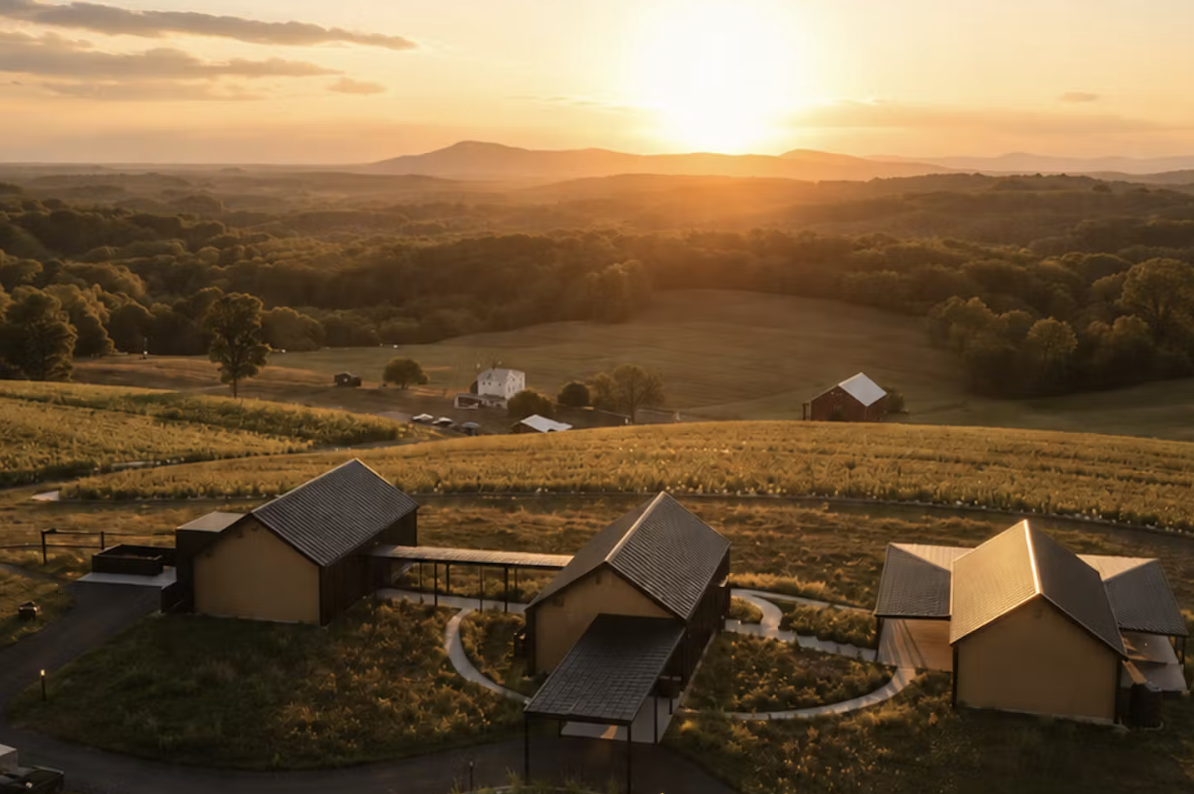
On a sun-drenched hill overlooking the Appalachians, lives the most beautiful farm—a 117-acre polyculture paradise.