
Resilience
The Fork in the Road
On April 21, a hard freeze hit Burnt Hill Farm after weeks of summer-like heat and early bud break. The season had started. The vineyard was awake and six inch tender green shoots carrying the seasons fruit clusters had pushed. Then, just before sunrise, temperatures dropped into the twenties for several hours. Across Burnt Hill and Old Westminster, we lost upwards of 100 tons of fruit. Roughly 72,000 bottles of wine that would have represented the 2026 vintage that will never exist.
A loss like this humbles you. It also clarified the work ahead.
We’re going to make changes.
This frost confirmed something we’ve been thinking about for years. The future of wine in Maryland can’t simply be about forcing famous European grape varieties sélection massale into an increasingly erratic climate. The future has to be more adaptive, more responsible, and more appropriate to the place we’re farming.
Regent is the clearest case study we’ve found to date. After the freeze, Regent quickly bounced back. It has fruitful secondaries, which means it can still produce after primary bud damage. In a year like this, that trait is a game changer. It proves that resilience and quality can live in the same vine.
That’s where we’re headed.
We’re looking seriously at new genetics bred for the intersection of wine quality, cold hardiness, fungal resistance, frost resilience, and environmental responsibility. Regent is just one example. Cabernet Volos, Merlot Kanthus, Floreal, Voltis, and other so-called PIWI grapes deserve attention. These aren’t backup plans. They’re part of a smarter, more sustainable future for wine.
For generations, the wine world has built its idea of greatness around noble grape varieties: Chardonnay, Pinot Noir, Cabernet Sauvignon, Merlot, Riesling. Those grapes, and even more specific clonal selections, carry history and prestige. We respect that history. We also grow and produce beautiful wines from so many of these grapes. We also believe the next era of iconic wine can be built, at least in part, on something more relevant to this moment: farming responsibility, environmental intelligence, and vines that thrive in our climate.
That’s the narrative Burnt Hill can help change.
We’re farming for the future. We’re building a vineyard that can be cultivated regeneratively and in tandem with nature. If we’re serious about cultivating the most beautiful farm, our vineyard needs to evolve. It has to become more resilient and so we must become more adaptive.
So we’re starting now.
One block of Champagne clone Chardonnay was largely killed by the freeze. We’re removing it and beginning again. We’re already taking out the trellis, pulling the vines, smoothing the hillside, and stabilizing the soil on this particularly steep slope. Then we’ll plant buckwheat.
Buckwheat will feed pollinators, protect the soil from the sun and erosion, and become part of the farm’s next chapter. This fall, we’ll harvest it and run it through our New American Stone Mill to produce estate buckwheat flour. Delicious, nutritious, and naturally gluten free. After that, we’ll follow with hard red winter wheat for next year’s stone milled bread flour, just before we replant the vineyard next May.
That rhythm feels right. The vineyard comes out, the soil stays alive, the pollinators are fed, grain becomes flour, flour feeds people, and then the vineyard returns later with a new identity.
This is what excites me. The farm is evolving. The new vineyard will represent where we believe wine needs to go.
This matters because vineyard decisions are thirty year decisions. What we plant now is what our kids inherit. I want hand down a farm that already made the jump.
The historic frost event not only changed the season, but also clarified the future.
We’re going to farm what remains, replant what no longer belongs, and use wine to tell a new story about beauty, resilience, and responsibility in American agriculture.
-Drew Baker, farmer / founding partner
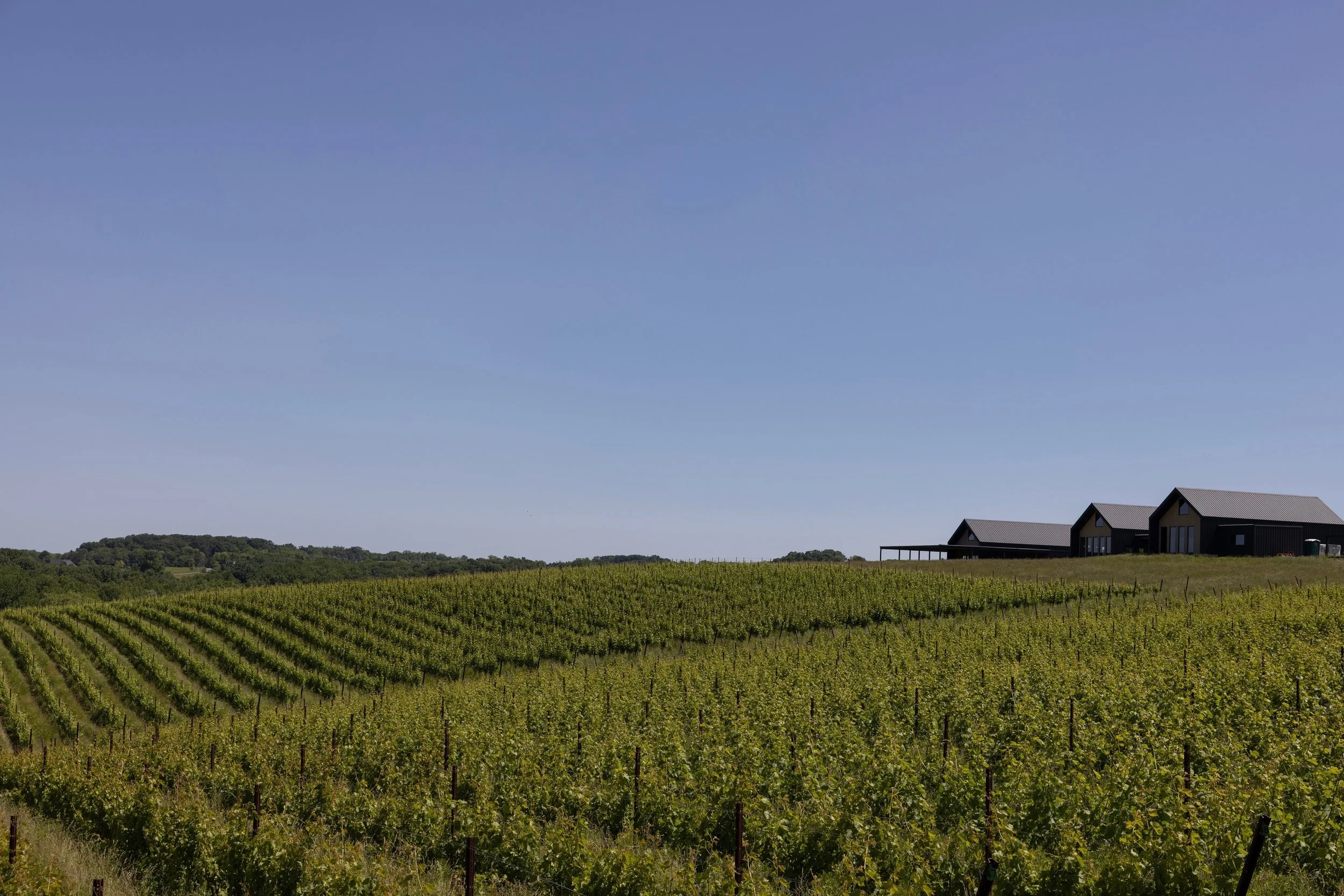
The estate vineyard at Burnt Hill Farm. Photo by Lindsey Plevyak.