
A Year at Burnt Hill Farm
The Year Burnt Hill Came Alive
2025 was a monumental year at Burnt Hill Farm. A year of return, renewal, and deep gratitude. After a decade of dreaming and years of interruption, this was the year the farm truly came alive. Month by month, the land, the people, and the vision came back into alignment.
January
Pigs returned to Burnt Hill. Before my battle with leukemia, we raised woodland hogs for years, and welcoming them back marked a deeply personal milestone in my recovery. We brought in Mangalitsa pigs, a rare Hungarian heritage breed often called the wagyu of pork. Nearly lost to industrial farming, they now thrive in our woods and pastures, regenerating the land and strengthening our polyculture. Their return felt like the farm breathing again.
February
We unearthed old glass from the long-lost King’s Distillery site on the property and imagined a second life for it. With the help of the artisans at Corradetti Glass, that history was transformed into estate wine decanters, objects that now carry our wines while honoring the past beneath our feet.
March
We planted new vineyard blocks. Trousseau went in atop the hill, tucked into a living cover of Turkey Red winter wheat. A soulful grape from the Jura, new to the eastern US and perfectly at home here. We also planted Merlot, named Nelly’s Block, after my daughter who rode the tree planter as we put every vine in the ground. Farming doesn’t get more meaningful than that.
April
We announced Chef Tae Strain as a chef partner at Burnt Hill Farm. It was a turning point ten years in the making. Tae brings a rare combination of talent, humility, and systems-driven leadership. His cooking is rooted in place, ecology, and people. Since joining, he has helped shape Burnt Hill as a living kitchen, one that reflects both the land and the community it serves. I’m deeply grateful to be his partner.
May
We revived the apiary. After years of loss, a single hive had survived three years without intervention. With master beekeeper Colie Huff, we split that survivor and rebuilt the apiary. The first honey we pulled was raw, wild, and deeply expressive of the land. Bees remind us that the health of a farm can be measured quietly, one wingbeat at a time.
Later that month, on May 28, we bottled our inaugural estate vintage. Rain fell softly as we filled the first bottles, a gentle soundtrack to a decade of labor and belief coming into focus. At Burnt Hill, red wine sits at the heart of the story. We spent years searching for the right site, steep slopes, rocky soils, and elevation, then matched clones and rootstocks to specific blocks defined by their geology. These are reserve-level, single-block, often single-barrel wines made with intention. In our inaugural 2021 vintage, no cuvée exceeded four barrels, and six wines came from a single barrel. With just 600 cases produced, these wines are rare and reserved exclusively for members and on-farm guests, so they can be shared today and decades from now.
June
We held the land in our hands. Ceramic artist Katie Aldworth of Material Things transformed Burnt Hill soil into plates, bowls, and cups. In June, we harvested 2,100 pounds of earth and shaped it into tableware now used in our tasting experiences. Food, wine, and vessels all from the same place. The loop closed.
July
We were invited to host a Platform Dinner at the James Beard Foundation. Few honors carry more weight. Titled An Exclusive First Taste of Burnt Hill, the dinner showcased Tae’s cooking and our farm on one of the most iconic stages in American food. It felt unreal and deeply humbling.
August
On August 8, the Burnt Hill Tasting Room opened its doors. A dream ten years in the making finally realized. Standing on the hill that day, surrounded by family, team, and guests, I felt overwhelming gratitude. Burnt Hill is more than a vineyard. It is resilience, hope, and joy made tangible.
September
Food and Wine named Burnt Hill Farm one of America’s Most Beautiful Vineyards. Out of thousands of wineries, only twelve were selected. The recognition affirmed our guiding idea of cultivating the most beautiful farm, not just in views, but in care, intention, and hospitality.
October
Harvest came in safely, and the 2025 vintage already feels extraordinary. After a challenging start, the season found its balance. The cellar is alive with native fermentations, and the farm hums with life. On the final day of harvest, I marked two years in remission from leukemia. My heart couldn’t have been fuller.
November
The sheep returned. With the help of friends, we restarted projects paused by illness. Livestock, grains, vineyards, orchards, and the apiary all moving forward again. It felt like reclaiming lost time with purpose.
December
We opened the Burnt Hill Lounge, a space designed for gathering, lingering, and shared plates. Where the Tasting Room is precise and polished, the Lounge is warm and relaxed. It completes our vision of three distinct experiences on the hilltop and invites guests to slow down and stay awhile.
As the year closes, we’re filled with gratitude. For the land. For our family and team. For our health. For the guests who believe in what we’re building. 2025 brought Burnt Hill to life.
We look ahead to 2026 with optimism, humility, and excitement for what’s to come.
— Drew Baker, Farmer & Founding Partner
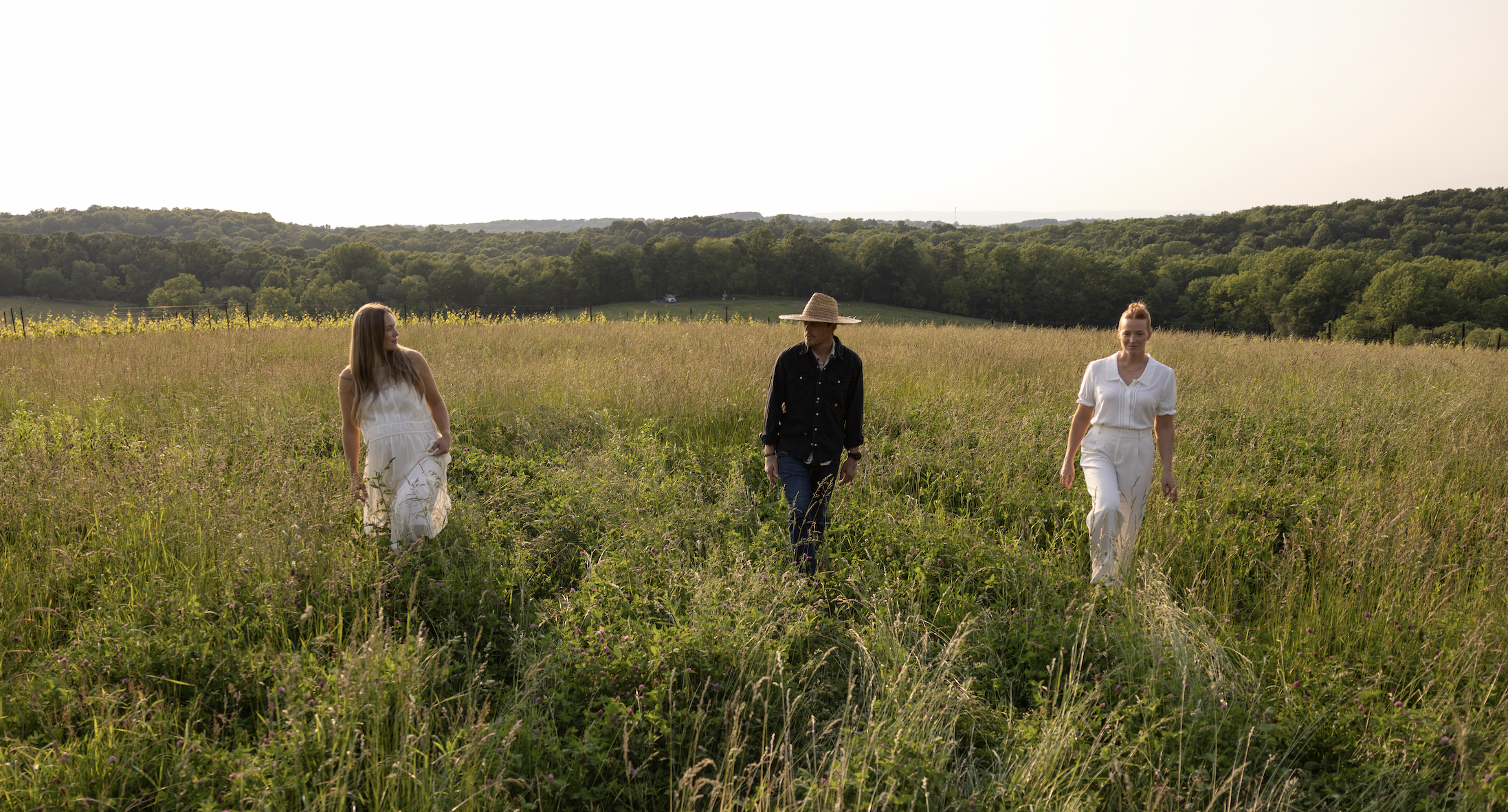
Winemaker Lisa Hinton, farmer Drew Baker, and general manager Ashli Johnson at Burnt Hill Farm