
The Lost Vintage
2026, the Lost Vintage
On the morning of April 21, we experienced a frost event unlike anything I’ve seen before. After weeks of spring warmth, budbreak had already taken place across the vineyard. Tender green shoots had emerged across both Burnt Hill Farm and our sister farm, Old Westminster Winery. Then, just before sunrise, temperatures dropped into the 20’s here at the farm, even on top of our big hill that usually sheds cold air and protects the vines.
Frost damage happens when those young shoots freeze. Ice forms within the plant cells, causing them to rupture. Once that happens, the shoots cannot recover.
What we’re seeing now is severe. The primary buds appear to be 100 percent gone. Across both farms, we believe we may have lost upwards of 100 tons of fruit. In my sixteen years of farming, I’ve never seen anything like this. I’ve never seen a single night so destructive to so many growers across such a wide geographic area, from as far south as North Carolina and all the way up through New York.
We did everything we could. We fought for every degree and every pocket of protection we could create. But when temperatures fall into the twenties, there is only so much anyone can do.
I’ll wait until mid May to make a final assessment after the secondary buds have fully pushed and risk of another cold snap has passed. I want to be measured before declaring the full extent of the loss. But the early signs are grim, and we are dealing with the very real possibility that the 2026 vintage is lost.
The financial reality is significant. On average, one ton of grapes yields about sixty cases of finished wine, or 720 bottles. At 100 tons of lost fruit, that is roughly 72,000 bottles of wine that will never exist. These are not commodity wines. These are the bottles that define our farms and sustain our business, sold directly to the people who visit us, believe in what we’re building, and support us bottle by bottle at prices ranging from $44 to $132. You can do the math. This is devastating.
The fruit may be gone, but the expenses are not. Payroll remains. Equipment costs remain. Repairs remain. Farming inputs remain. We still have a full time team farming these vines. We still have to mow, tuck shoots, manage canopy, monitor disease pressure, train trunks, control weeds, maintain trellis, and make careful decisions block by block. Frost only makes that work harder. Damaged vines respond unpredictably. Secondary growth comes unevenly. Disease pressure gets more complicated. Even with little or no crop this year, the vineyard still has to be farmed carefully for what comes next.
I’m still wrapping my head around what this loss will mean for our business, our team, and our family. My job now is to lead well in uncertainty.
If there is a small amount of wine to make this year, we’re going to make the best wine possible from the grapes we have. We have also prepared for the reality of farming saving wines in reserve for moments like this.
Our family would not be able to do this work without the support of the people around us. Our team is exceptional. Our community is exceptional. The people who visit, join our wine club, open our bottles, and believe in local agriculture make it possible for us to keep doing what we love.
This is the reality of farming in the Mid Atlantic. A single night can change the season. Now we get back to work and do everything we can for 2027.
Go support a local farmer today. We need you.
-Drew Baker, farmer / founding partner
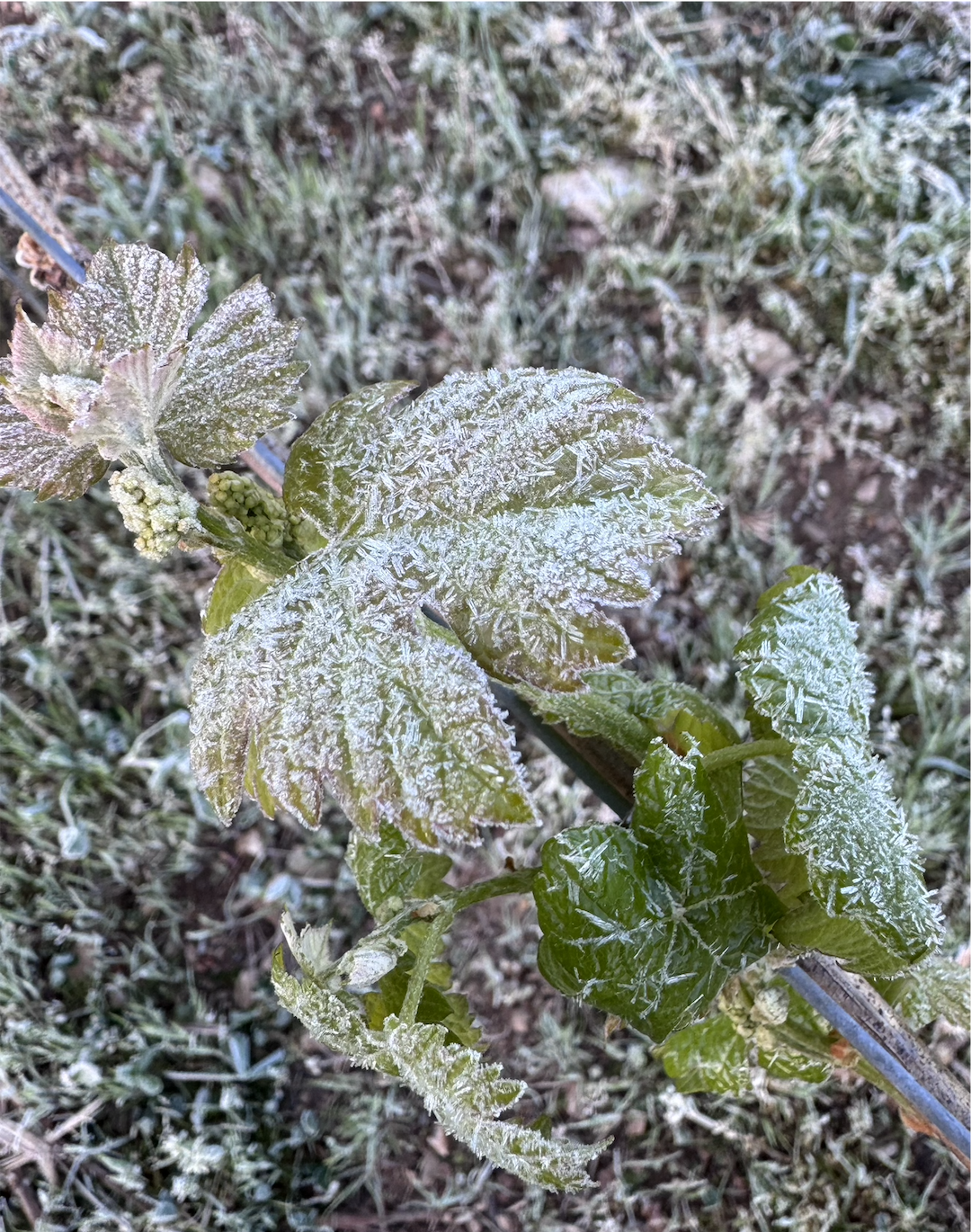
A tender Cabernet Franc shoot covered in frost on the morning of April 21.