
Built on Living Soil
Four Methods for Improving Soil Health
At Burnt Hill, soil health is a system. A living network shaped by plants, animals, microbes, minerals, water, and time. The goal is to create the conditions where the soil feeds itself.
Over years of observation, learning and experimentation, we’ve come to rely on four core methods to build and maintain soil health across the farm: cover crops, biodiversity, biodynamic field sprays, and the careful minimization of harmful chemicals. Together, these form the backbone of our regenerative viticulture model.
1. Cover Crops
Cover crops are the foundation of our soil strategy. We focus on four functional plant types: grasses, legumes, brassicas, and flowers. Each plays a different role, and together they create a complex underground ecosystem.
In late summer, we sow a diverse mix into our vineyard row middles that typically includes barley, clover, daikon radishes, and flax.
Grasses mitigate erosion and help wick moisture through the soil profile. Their dense root systems stabilize structure and protect against compaction.
Legumes fix atmospheric nitrogen and make it biologically available to plants. This replaces synthetic fertilizers with slow, microbial driven fertility.
Radishes act as natural tillage. Their deep taproots penetrate compacted layers, improving aeration, drainage, and root access to deeper minerals.
Flowers provide habitat for beneficial insects and pollinators while increasing root diversity underground.
The goal of cover cropping is root diversity. Different roots feed different microbes, and microbial diversity is what drives nutrient cycling, disease suppression, carbon storage, and long term soil structure.
Healthy vineyards start underground.
2. Biodiversity
Biodiversity is built into the architecture of the farm itself. We increase biodiversity through four primary channels: animals, habitats, diverse crops, and beneficial soil flora.
Animals are functional members of the system.
Our Leicester Longwool sheep graze the vineyard from the day after harvest in mid October until bud break in the spring, transforming the cover crop into plant available nutrients and gently aerating the soil with their hooves as they move across the land all winter.
Our poultry free range across the farm, feeding on insects and local non GMO grain. We process them ourselves and return nutrients directly to the land.
Our Mangalitsa pigs are raised in the woods, where they feed on acorns and forest plants while naturally disturbing and rejuvenating the woodland ecosystem. They aerate soil, cycle nutrients, and convert food scraps into fertility.
Habitats are intentionally created. We plant native wildflower meadows throughout the farm to support pollinators and beneficial insects. While honeybees are not required for grape pollination, we raise them because they are indicators of ecosystem health and drivers of biodiversity.
This requires responsibility and sound integrated pest management practices. A farm that harms pollinators cannot claim to be regenerative.
Diverse crops add additional layers of resilience. Beyond vineyards and livestock, we farm small grains, mushrooms, and fruit trees.
We planted twenty acres of small grains, including an heirloom wheat variety called Turkey Red. Once the dominant hard red winter wheat in the United States, it had nearly disappeared from production. It survived only because a few farmers kept the seed alive. Growing it reconnects us to agricultural history while increasing genetic diversity on the farm.
We also grow shiitake and oyster mushrooms on logs in the woods. We scouted for ideal microclimates near a stream, selected and cut appropriate hardwoods, rested the logs, inoculated them, and arranged them along the forest floor. The mushrooms emerge directly from the ecosystem.
Our orchards include apples, peaches, pears, and plums. Perennial fruit trees deepen root systems, stabilize soil, support pollinators, and extend the productive season of the farm.
Finally, we actively promote beneficial soil flora. One of the most powerful tools we use is chitin.
Many molds and mildews, including a vineyard nemesis, Downey Mildew, are chitin structures. Crab meal contains high levels of chitin. When added to soil, it feeds chitin eating bacteria, which attack chitin based fungal pathogens. At the same time, chitin triggers a natural defense response in plants, causing them to release enzymes that break down fungal cell walls.
In practice, crab meal creates a hostile environment for disease while strengthening plant immunity. We sometimes pair it with biological inoculants that introduce beneficial chitin eating microbes directly into the soil.
Rather than spraying against disease, we redesign the soil to resist it.
3. Field Sprays
Biodynamic field sprays are not inputs in the conventional sense. They are catalysts. Their purpose is to stimulate biological processes already present in the system.
We use Pfeiffer Field Spray, which includes biodynamic preparations 500 through 507. These stimulate beneficial soil bacteria, enzymatic activity, and root development.
We also use barrel compost, a concentrated microbial preparation containing biodynamic herbs, basalt, and eggshells. We make it ourselves, stir it into water, and spray it directly onto the vineyard floor throughout the season. It activates soil life without overwhelming the system with organic matter.
Horsetail tea, preparation 508, is sprayed onto vines to help prevent fungal disease. It strengthens cell walls and improves natural resistance.
Silica, preparation 501, is sprayed around veraison to increase photosynthesis and encourage fruit maturation. It enhances the plant’s relationship with light.
4. Minimizing Chemicals
There is no honest conversation about vinifera that ignores disease pressure. Fungicides are sometimes necessary. Every vineyard exists on a spectrum between intervention and restraint.
Every input changes the balance of a system. Whether synthetic or organic, nothing is neutral. Everything has consequences.
Our approach is to intervene only when necessary and to choose the least disruptive option available. We rely on soil health, biodiversity, and biological resistance first. When we must spray, we do so thoughtfully, knowing we are altering a living system.
Regenerative farming is not about eliminating all inputs. It is about redesigning the system so fewer are needed over time, and so the ones we do use support life rather than suppress it.
Soil is the Central Intelligence of the Farm.
Cover crops feed it. Animals shape it. Biodiversity stabilizes it. Field sprays activate it. Careful chemistry protects it.
When soil is alive, vines root deeper. Disease pressure drops. Water use becomes more efficient. Fruit expresses place more clearly. And the entire farm becomes more resilient.
-Drew Baker
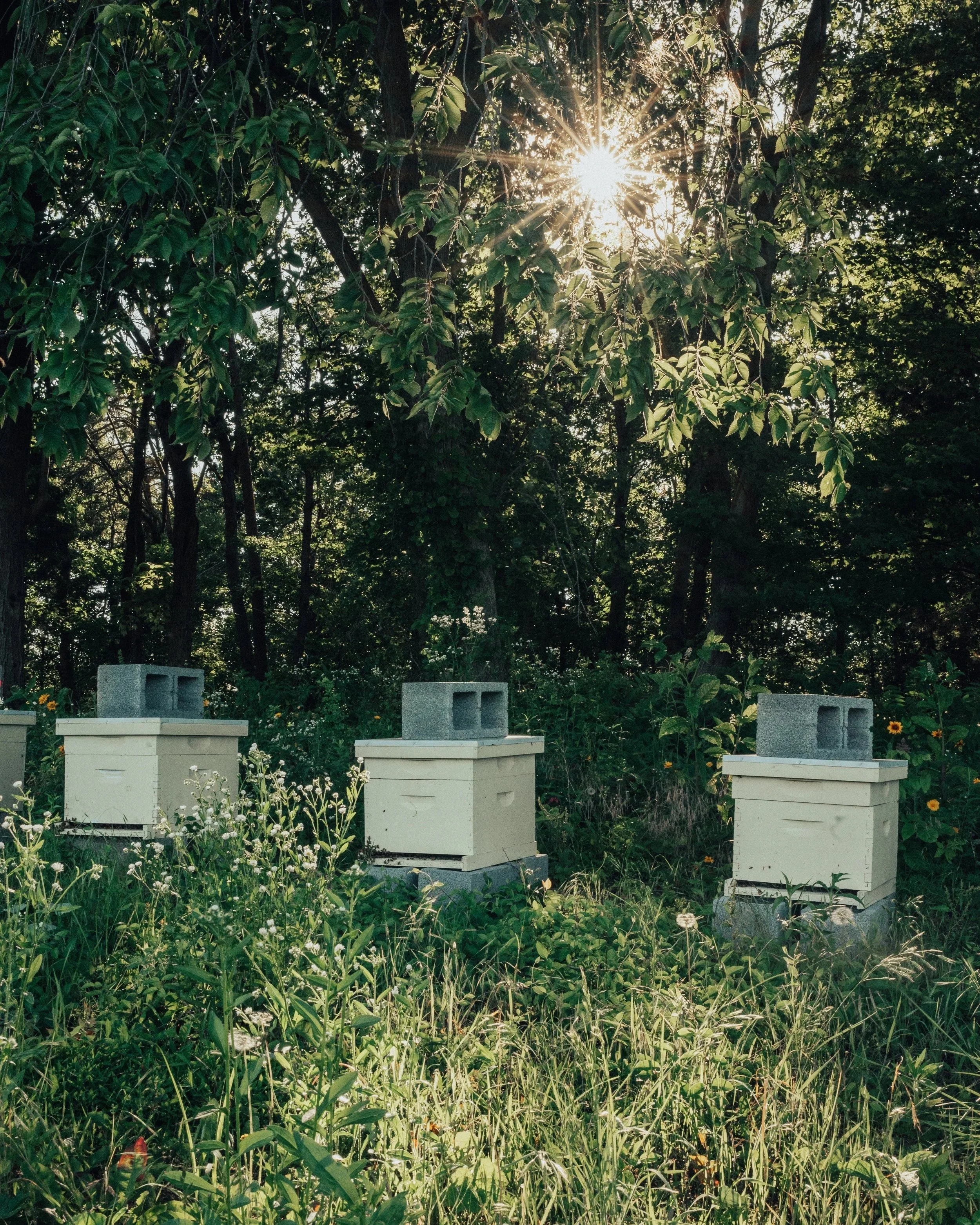
Beehives tucked into wildflower meadows and old growth forests in late spring at Burnt Hill Farm.
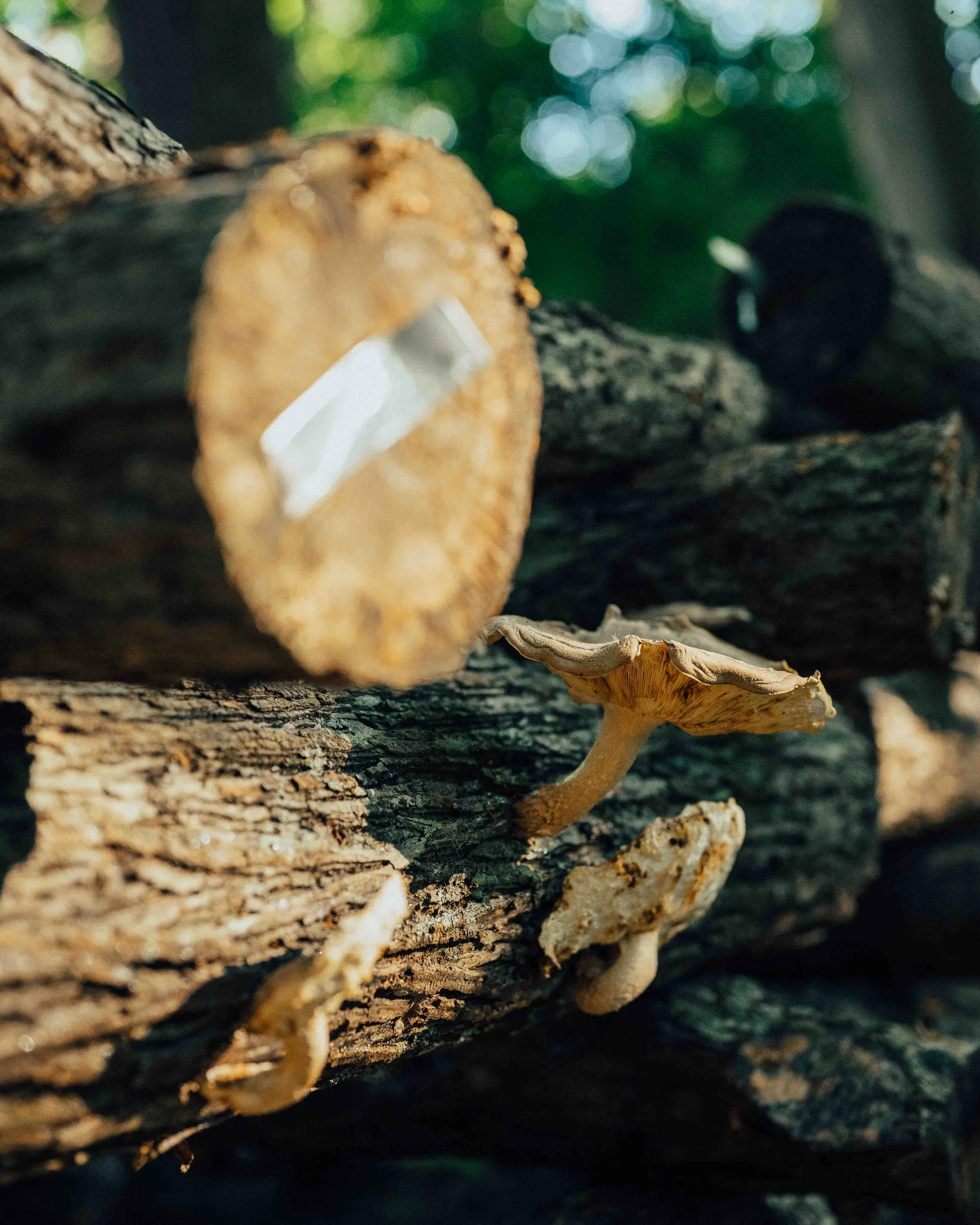
Shiitake mushrooms grown on hardwood logs in the woods alongside a stream at Burnt Hill Farm.
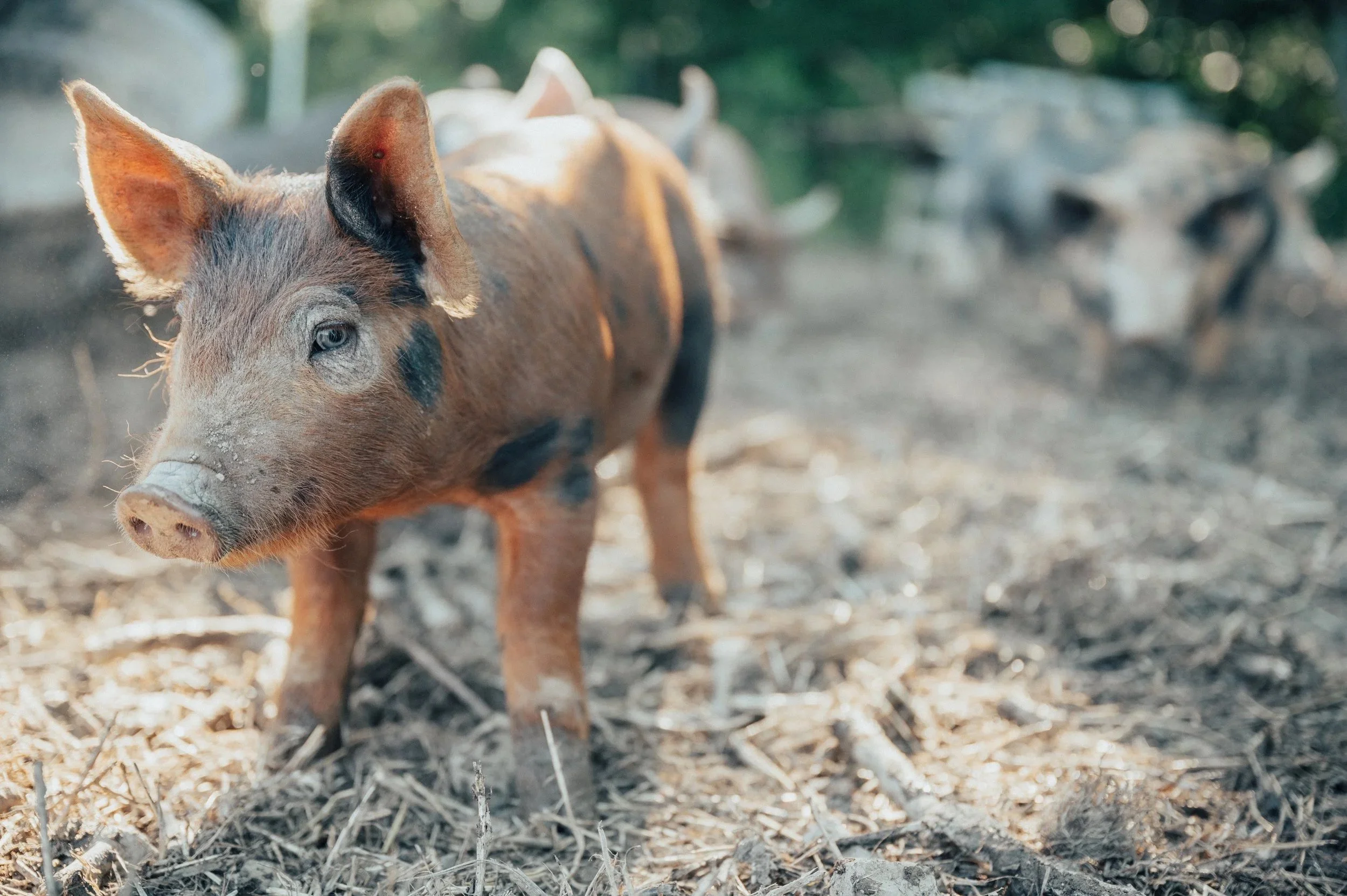
A curious piglet, just weeks old, learning its way through the woods.
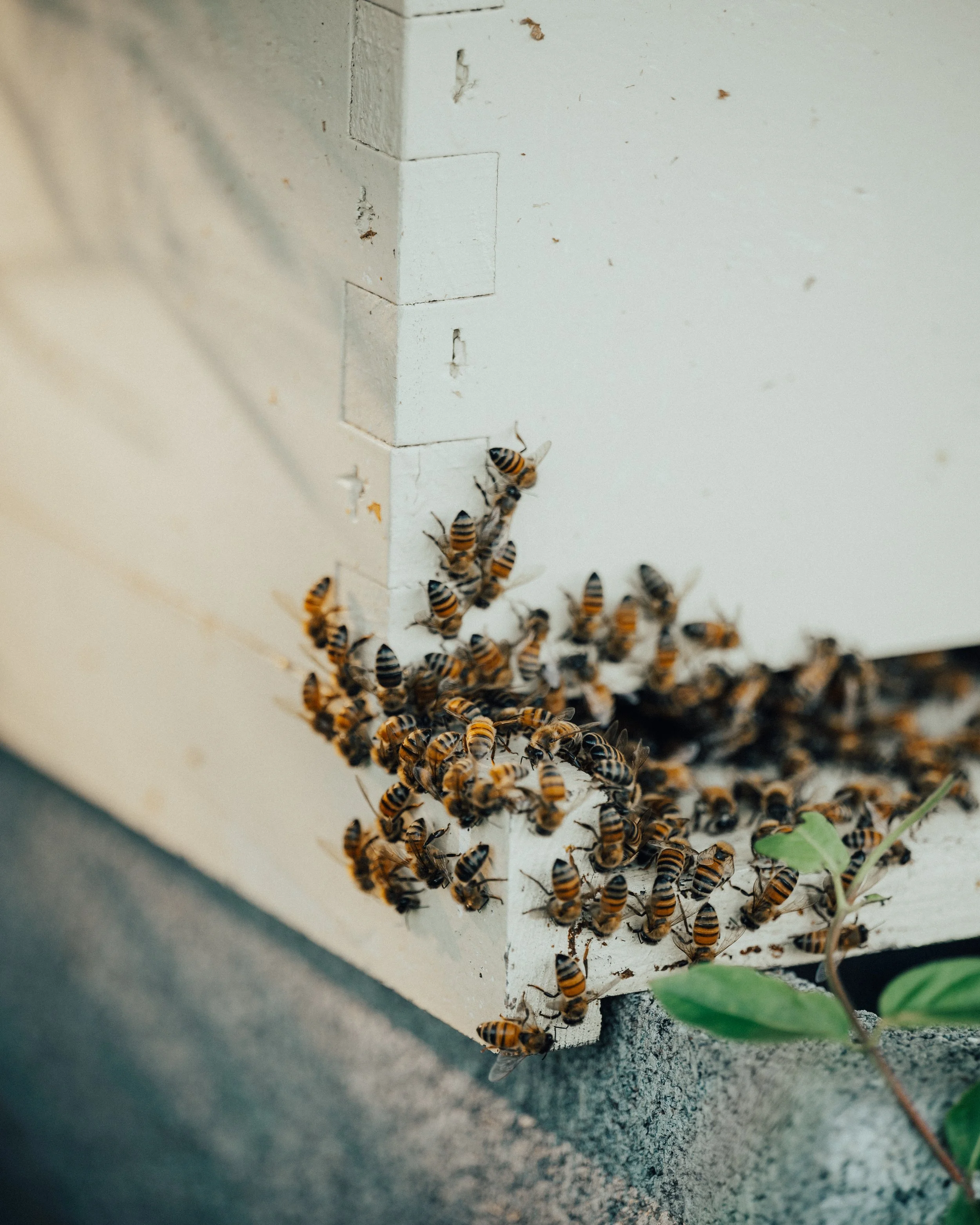
Honeybees bearding on the hive after returning from spring exploratory flights in search of pollen.